Mountain Bike Xtreme
- 4.2
- Rating
- 10.00M
- Installs
- Free
- Price

 Analysis by App-foxy
I first noticed Mountain Bike Xtreme because it promises a very specific kind of racing experience: off-road riding where the landscape and the bike’s movement matter as much as speed. After spending time with it, I found a game that works best in short, focused sessions. It is free, rated for Everyone, and made by Pixel Joy, so it is easy to place on a shared phone or tablet when several people in the household want something simple to pick up.
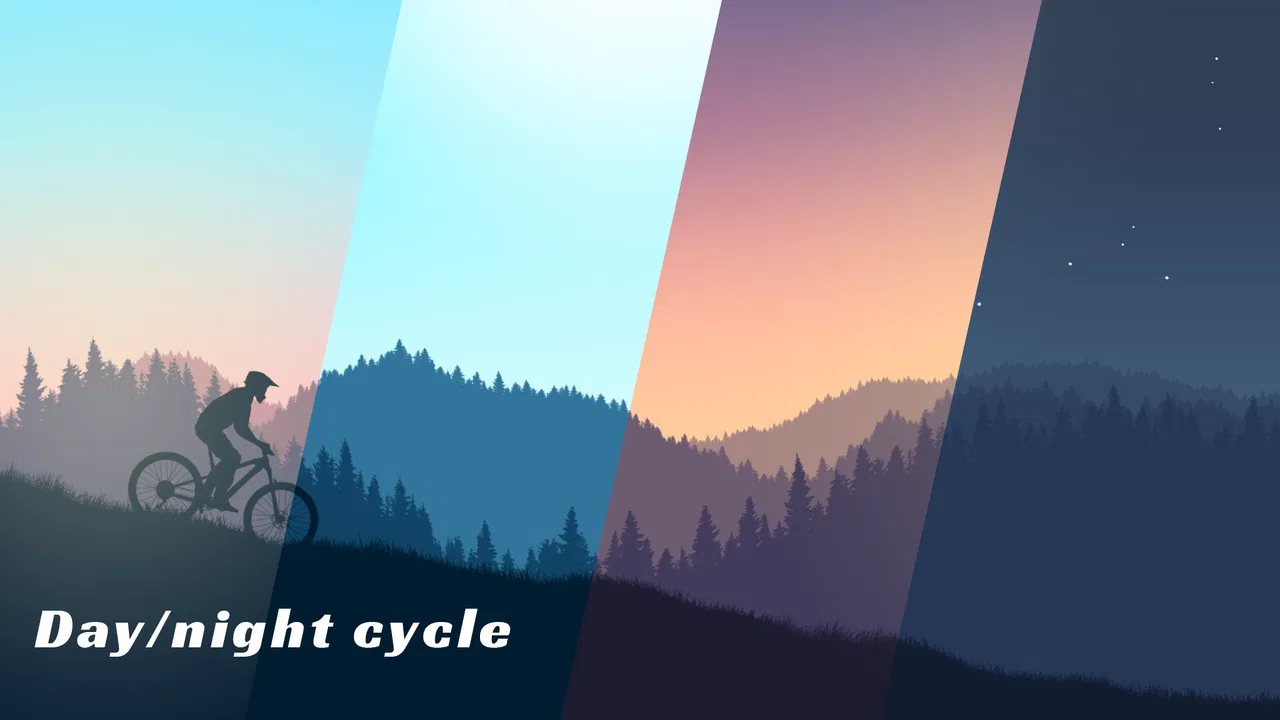
This is not a broad collection of licensed vehicles or a competitive racing platform packed with social systems. Its appeal is narrower and more physical. The focus is on controlling a mountain bike through uneven routes, judging momentum, and enjoying the feeling of a trail opening in front of you. The realistic physics are the main reason to stay with it, while the scenery gives each run more character than a plain obstacle course.
How it feels when a shared device becomes the trail
In a household, the most natural way to use this game is as a pass-and-play experience. One person can take a run while another watches, then hand over the device after a crash or a completed section. That arrangement suits the game better than trying to turn it into a long group activity. The action is immediate, and a short attempt is easy to understand even for someone who has never seen it before.
You May Also Like

 Blood Strike: 2.5 Anniversary
Blood Strike’s Loadouts Turn Every Drop Into a Tactical Gamble
A close look at Blood Strike’s custom loadouts: how fast access to signature weapons reshapes its battle royale rhythm, rewards preparation, and narrows the gap between fights.

 Pandora - Music & Podcasts
Pandora’s Music Is Easy to Start, but Harder to Recover
Pandora’s strength is its low-effort path from a seed to a station. Its weak spot is how much confidence it asks you to place in connection, setup, and quiet recovery.

 8 Ball Pool
 Is Built on Rivalries, Rematches, and Routine
A close look at the rivalries, rematches, shared routines, and unanswered safety questions that turn a quick pool match into a persistent mobile community.

 Samsung Music
’s Quiet Strength Is Playing What You Already Own
Its reach comes less from spectacle than from dependable access to a personal library. That simplicity is both the app’s strongest retention engine and its ceiling.

 AccuWeather: Weather Radar
AccuWeather Review: A Quick, Clear Forecast for Everyday Decisions
For everyday plans, the best forecast is the one you can understand quickly. AccuWeather makes rain timing, radar, and local conditions easy to act on, with a few trade-offs.

 Hill Climb Racing
Why Hill Climb Racing Still Turns Crashes Into One More Run
A tiny car, a bumpy hill and one more upgrade: Hill Climb Racing keeps resurfacing because its simple chaos makes every near-miss feel personal.
More From Our News Desk



I can imagine it working well during a quiet break at home: one family member uses the tablet for a few minutes, then leaves it ready for someone else. There is no need to explain a complicated story or teach a large set of menus before the first ride. The useful household habit is to treat each attempt as a self-contained turn rather than expecting everyone to share one continuous progression experience.
That distinction matters. If you are looking for a game designed around several profiles, shared achievements, or formal multiplayer coordination, this is not the obvious choice. Its strength is the physical challenge of riding, not household account management. A shared device can make it approachable, but the game itself should not be mistaken for a family-management tool.
Why the physics reward patience
The bike does not feel like a car that can simply be pointed toward the finish. Hills, drops, and changes in the trail ask you to think about balance and timing. I found that rushing usually made a promising run worse. A controlled approach before a difficult section is often more useful than trying to maintain maximum speed everywhere.
That creates a nice difference between a first attempt and a later one. At first, I reacted to obstacles only when they were directly in front of me. With more practice, I started reading the shape of the route earlier, preparing for landings and adjusting my pace before the bike reached a steep change. The game becomes more satisfying when you stop treating every slope as a sprint.
A practical tip for new players is to use the opening part of a run to learn the bike’s response instead of immediately chasing a perfect performance. Notice how quickly the rider reacts, how much correction is possible in the air, and how forgiving a landing feels. That small period of observation saves repeated frustration later, especially when the scenery makes a route look easier than it really is.
Setting expectations before handing over the device
Because the game is free, it is tempting to install it casually and assume it will suit everyone. I would still set a simple boundary before sharing it: explain that the main challenge comes from learning control, not from tapping randomly until the bike reaches the end. Younger players may enjoy the scenery immediately, but the physics can also lead to quick crashes if they expect an arcade ride with no consequences.
The Everyone age rating makes it suitable for a broad audience, but an age label does not tell you whether a particular child will enjoy the handling. Some players want instant wins and constant action. Others like repeating the same section to improve. Mountain Bike Xtreme is much better for the second group. In my experience, the game rewards calm experimentation more than impatient button pressing.
On a shared tablet, I would also agree on a simple turn-taking routine. A player can complete a run, stop after a crash, or hand over the device after a short timer chosen by the household. That is not a built-in feature of the game; it is just a practical way to keep the experience friendly when several people want a turn. Clear expectations prevent the usual argument over who is “almost finished.”
What each player should understand about progress
Before several people use the same device, it is worth agreeing on whether everyone is trying to improve one shared result or simply playing for fun. A racing game can become awkward when one person treats the current progress as a personal record and another experiments without caring about the outcome. Mountain Bike Xtreme is more comfortable in a shared setting when the household views attempts as practice rather than as something that must be protected.
I would especially avoid handing the device to a younger player with the instruction not to change anything, unless an adult is staying nearby. The game is built around trying, failing, and trying again, so experimentation is part of its appeal. Shared use works best when everyone understands that a crash is normal and that a less experienced rider may need several attempts to feel comfortable.
This also gives the game a useful role in a household with mixed experience. An experienced player can demonstrate how to approach a slope without taking over the whole session. Instead of simply saying “go slower,” show the timing of the adjustment and explain what you were watching on the trail. That turns a short game into a small coaching moment without making it feel like a lesson.
Age, trust, and the limits of a simple racing game
The age rating of Everyone is reassuring for general household use, and the game’s premise is easy to understand. Still, trust matters more than the label when children share a device. I would let a child play independently if the device is already set up for them and the household is comfortable with the way that device is used. I would not treat the rating as a substitute for checking the game personally.
There is another reason to keep expectations clear: a free game can sit alongside other apps, notifications, and store activity on the same phone or tablet. That is a device-level concern rather than a special quality of this game. If a child uses a shared device, an adult should decide what general boundaries apply to that device before installing any game, rather than assuming the game itself will provide every boundary needed.
For family use, I appreciate that the core idea is straightforward. Nobody has to follow a complicated narrative, understand a large roster, or learn a competitive ranking system before enjoying a ride. That simplicity makes it easier to recommend to a mixed-age group, provided the adults understand that the challenge may feel demanding to players who prefer instant success.
How it compares with other racing choices
Compared with a typical car-racing game, this feels more deliberate and less focused on overtaking opponents. There is a different kind of tension in managing a bike over a trail. You are often competing against your own control and consistency rather than reacting to a pack of vehicles. If you enjoy cornering, drifting, and head-to-head races, a conventional arcade racer may give you more immediate excitement.
Compared with a pure stunt game, Mountain Bike Xtreme has a stronger sense of route and movement. The bike is not just a prop for spectacular jumps. The landscape, slopes, and trail shape influence how you approach a section. That makes it a better fit for someone who wants to improve their riding decisions, while a stunt-focused alternative may be more rewarding for players who only want dramatic tricks.
It also differs from a realistic cycling simulator. The game presents the idea of mountain biking through accessible controls and a clear racing format rather than trying to reproduce every part of a real ride. That balance is useful on a phone, but it means serious cycling enthusiasts should not expect training data, route planning, or a substitute for outdoor riding. The attraction is the playable interpretation of trail riding, not technical fitness tracking.
Small techniques that make repeated runs worthwhile
My first useful adjustment was to stop judging a section by how fast it looked. A downhill stretch can invite reckless speed, yet the real goal may be arriving at the next transition with enough control to recover. I began treating the trail as a sequence of decisions: prepare, commit, land, then reset. That mental rhythm made the physics feel less random.
A second tip is to watch the terrain immediately after a jump, not only the jump itself. Players naturally focus on getting airborne, but the landing determines whether the next section begins under control. Looking ahead changes the way you approach the takeoff. You may choose a slightly slower entry if it gives you a cleaner landing and a better chance of continuing.
A third insight is that a household can use different goals without changing the game. One player can aim simply to finish a route, another can work on smoother landings, and a more experienced rider can chase faster, cleaner attempts. This avoids forcing a young or new player to compete directly with the strongest person using the device. Everyone gets a meaningful target while still sharing the same game.
Short sessions are also a strength here. When I played with a specific goal—learning one difficult transition or completing one careful run—the game felt focused. When I played without a plan and repeated failed attempts automatically, the experience became more tiring. For a shared device, agreeing on a small objective before each turn keeps the game from becoming an endless cycle of frustration.
Device compatibility and practical expectations
The game supports devices running Android 5.1 or later, which gives it a broad reach across older Android hardware. That is helpful if the shared household phone or tablet is not new. Even so, compatibility at the operating-system level is not the same as identical performance on every device. Older hardware may make any visually detailed racing experience feel less comfortable than it would on a newer screen.
The landscapes are an important part of the presentation, so screen size affects the experience. A larger tablet can make the trail easier to read and more pleasant to watch when people take turns. A phone is more convenient for a quick solo session, but the smaller display gives you less visual room to anticipate changes in the route. If you are choosing between two household devices, I would favor the one that makes the terrain easiest to follow.
The game is free to install, which lowers the barrier for trying it with the family. I would still approach any free app with ordinary device awareness: install it through the platform’s normal store, keep the operating system maintained, and make sure the person responsible for the device is comfortable with its general app settings. Those are sensible habits for a shared phone, not special requirements invented for this title.
Who will enjoy it, and who should skip it
I would recommend it to players who like learning physical controls, scenic off-road routes, and the satisfaction of turning an unstable run into a clean one. It is particularly suitable for someone who wants racing without the noise of a large car roster or constant competition against other players. The game’s appeal grows when you enjoy gradual improvement.
I would be more cautious about recommending it to a player who needs a strong story, deep customization, or a clear multiplayer community. Those expectations point toward a different kind of racing game. It is also not my first choice for someone who dislikes repeating a section after a mistake. The realistic handling is part of the charm, but it is also the source of the main friction.
For a family, the best match is a household that can share a device calmly and accept different skill levels. A child who likes exploring slopes may have a good time even without mastering every route. A child who wants constant rewards may lose interest sooner. Adults should be ready to frame the game as practice and play rather than as a guaranteed sequence of easy victories.
What the numbers suggest about its staying power
Mountain Bike Xtreme has reached more than ten million installs and holds a 4.3 average from roughly sixty-seven thousand ratings. Those figures suggest that the basic idea has found a substantial audience, while the rating also feels consistent with a game that has clear strengths and some limitations rather than universal appeal. It is established enough to be worth trying, but the rating should not persuade you to ignore whether you enjoy physics-based riding.
The game was released on March 31, 2018, and its current version is 2.3. That places it in the category of an established mobile title rather than a brand-new experiment. I see that as useful context: choose it for the riding experience and accessible premise, not because you expect the constant novelty associated with a newly launched racing game.
Its store summary highlights physics, landscapes, and trails, and that is an accurate description of where the value lies. The important question is whether those elements match your preferred pace. If they do, the game can remain enjoyable through repeated attempts. If you want a broad package of modes and social competition, the same simplicity may feel limiting.
My household verdict
After considering it as both a solo game and a shared-device option, I see Mountain Bike Xtreme as a good recommendation for households that want an easy-to-start racing game with a more thoughtful physical feel. It is free, accessible to a wide age range, and simple enough for someone to understand after watching a single turn. The scenery gives the experience personality, while the bike handling provides the reason to keep practicing.
The best way to introduce it is to set expectations early: take turns, accept crashes, and choose a small goal for each session. That approach makes the game more welcoming for younger or less experienced players and stops the strongest rider from dominating every shared attempt. It also respects what the game actually does well instead of asking it to become a family account system or a full competitive platform.
I would skip it if your priority is multiplayer racing, extensive vehicle customization, or instant arcade action with little resistance. For everyone else, especially players who enjoy mastering slopes and improving one run at a time, it is a worthwhile free download. My final view is positive but specific: this is best enjoyed as a focused mountain-bike challenge, and in a shared home, its success depends as much on sensible turn-taking as on the quality of the ride.
FAQs for Mountain Bike Xtreme
01What are the system requirements for Mountain Bike Xtreme?
Mountain Bike Xtreme is designed to run smoothly on most modern Android and iOS devices. For Android, it requires version 5.0 (Lollipop) or higher, while iOS users need version 10.0 or later. Ensure your device has at least 2GB of RAM for optimal performance, and sufficient storage space for downloading and installing updates.
02Is Mountain Bike Xtreme available for offline play?
Yes, Mountain Bike Xtreme offers offline play, allowing users to enjoy the game without an internet connection. This feature is ideal for playing in locations with limited connectivity. However, some features like leaderboards and multiplayer modes require an active internet connection to function.
03Are there any in-app purchases in Mountain Bike Xtreme?
Mountain Bike Xtreme includes optional in-app purchases that enhance your gameplay experience. These purchases range from unlocking new bikes and tracks to buying power-ups and customizations. While the game is free-to-play, these purchases can provide additional content and convenience for players seeking to progress faster.
04How do I customize my bike and rider in Mountain Bike Xtreme?
Customization in Mountain Bike Xtreme is straightforward. Players can access the customization menu from the main screen, where they can choose from a variety of bikes, outfits, and gear. Some items are unlocked through gameplay, while others may be purchased through in-app transactions, allowing for personalized styling and performance.
05What kind of gameplay modes are available in Mountain Bike Xtreme?
Mountain Bike Xtreme offers several exciting gameplay modes, including time trials, freestyle, and competitive races. Each mode presents unique challenges and objectives, catering to different play styles. Players can test their skills in solo play or compete against others via online leaderboards, adding to the game’s replayability.
Pros
- Stunning graphics and realistic terrain.
- Intuitive controls for smooth gameplay.
- Variety of challenging levels.
- Customizable bikes and gear.
- Offline play available.
Cons
- Occasional in-game ads can interrupt.
- Limited soundtrack variety.
- Some levels are very difficult.
- In-app purchases can be expensive.
- Requires frequent updates.

Mountain Bike Xtreme
Gallery